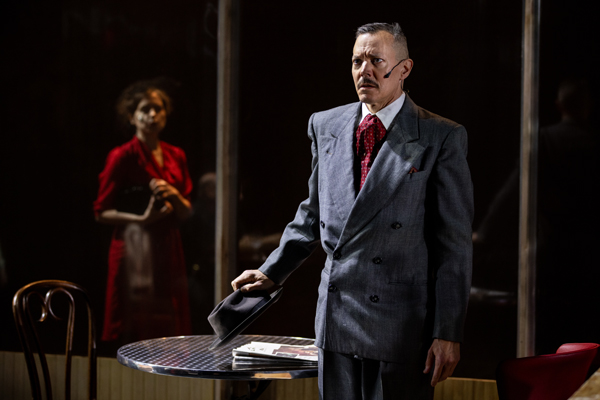
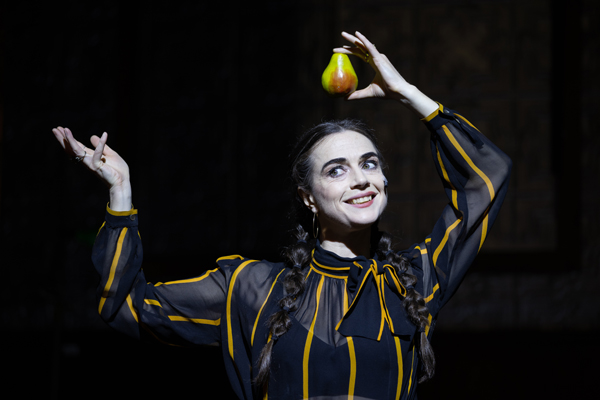
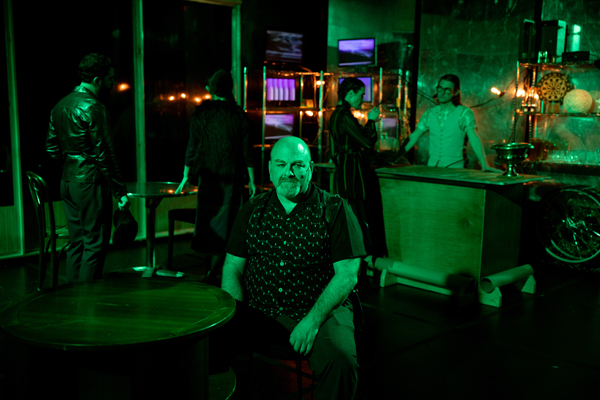
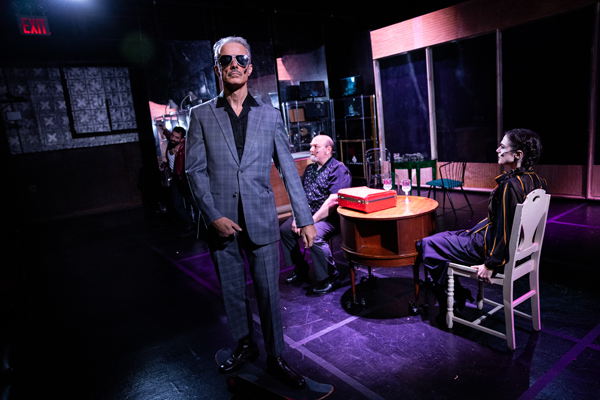
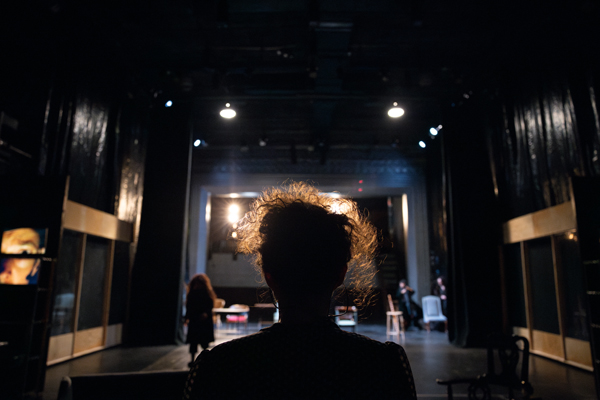
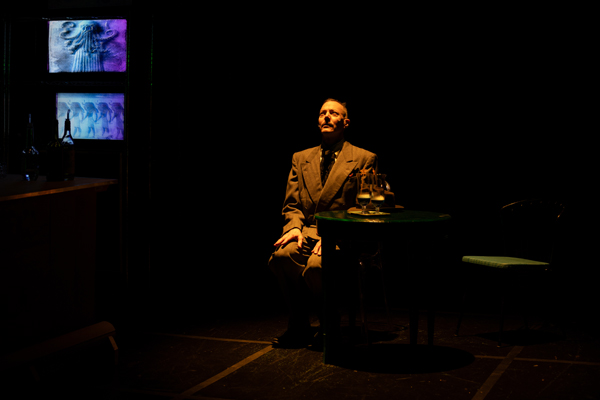
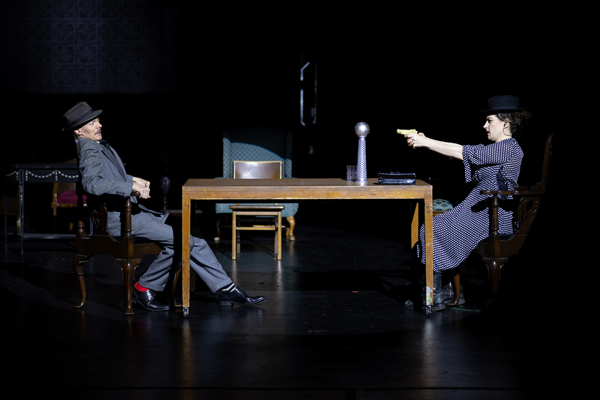
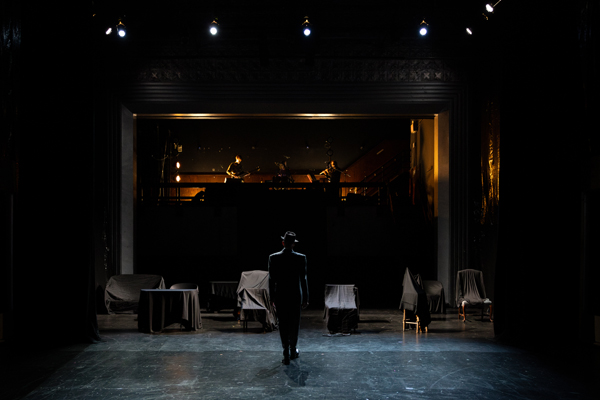
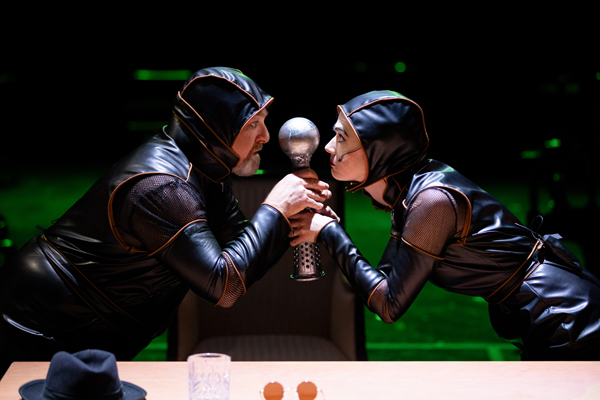
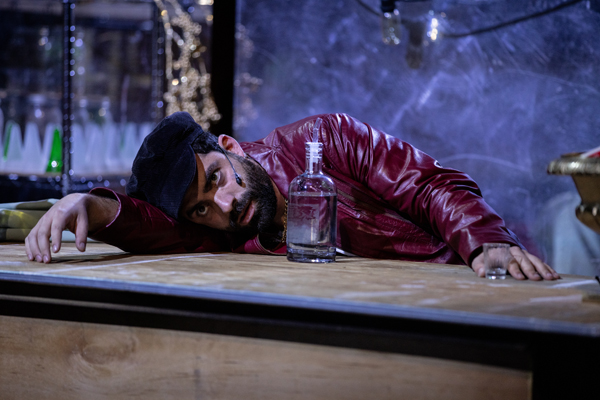
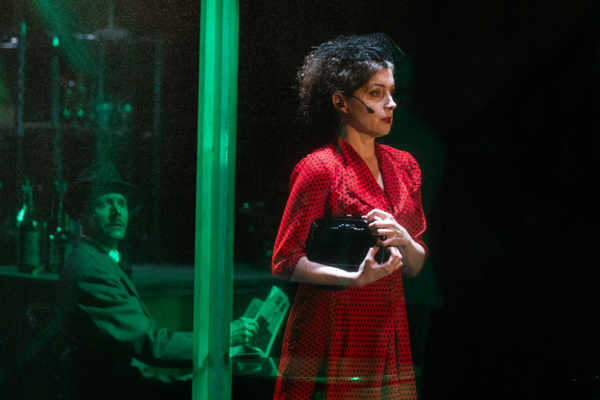
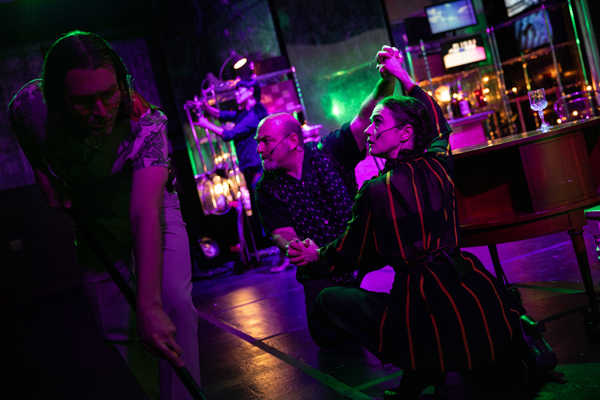
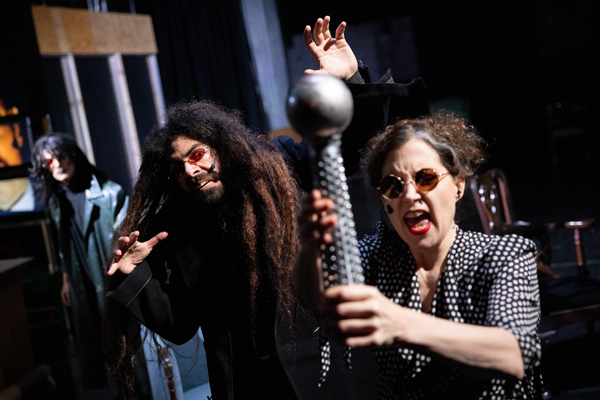
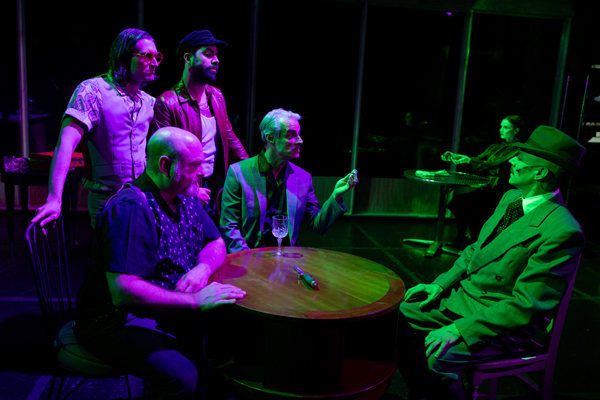
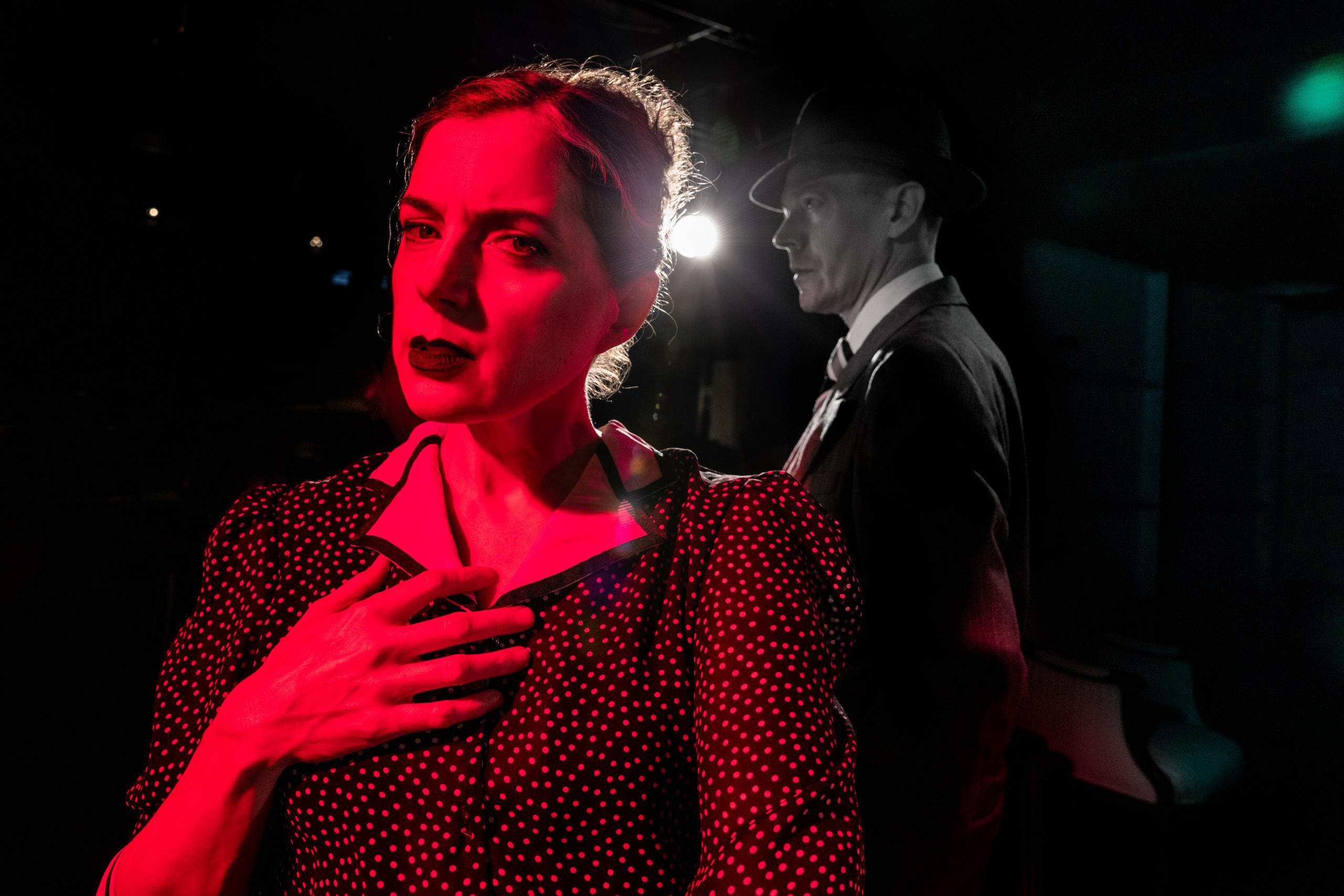
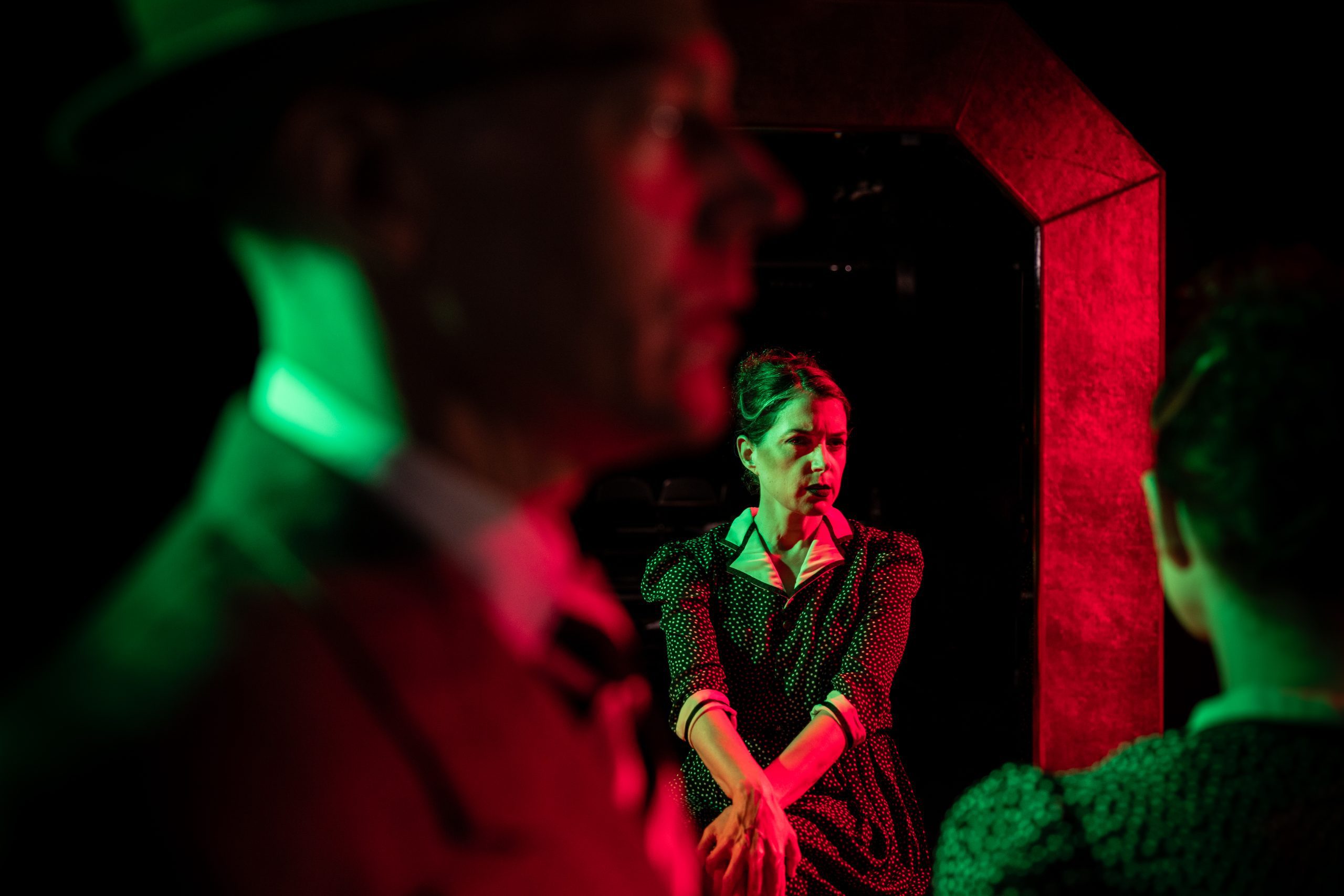
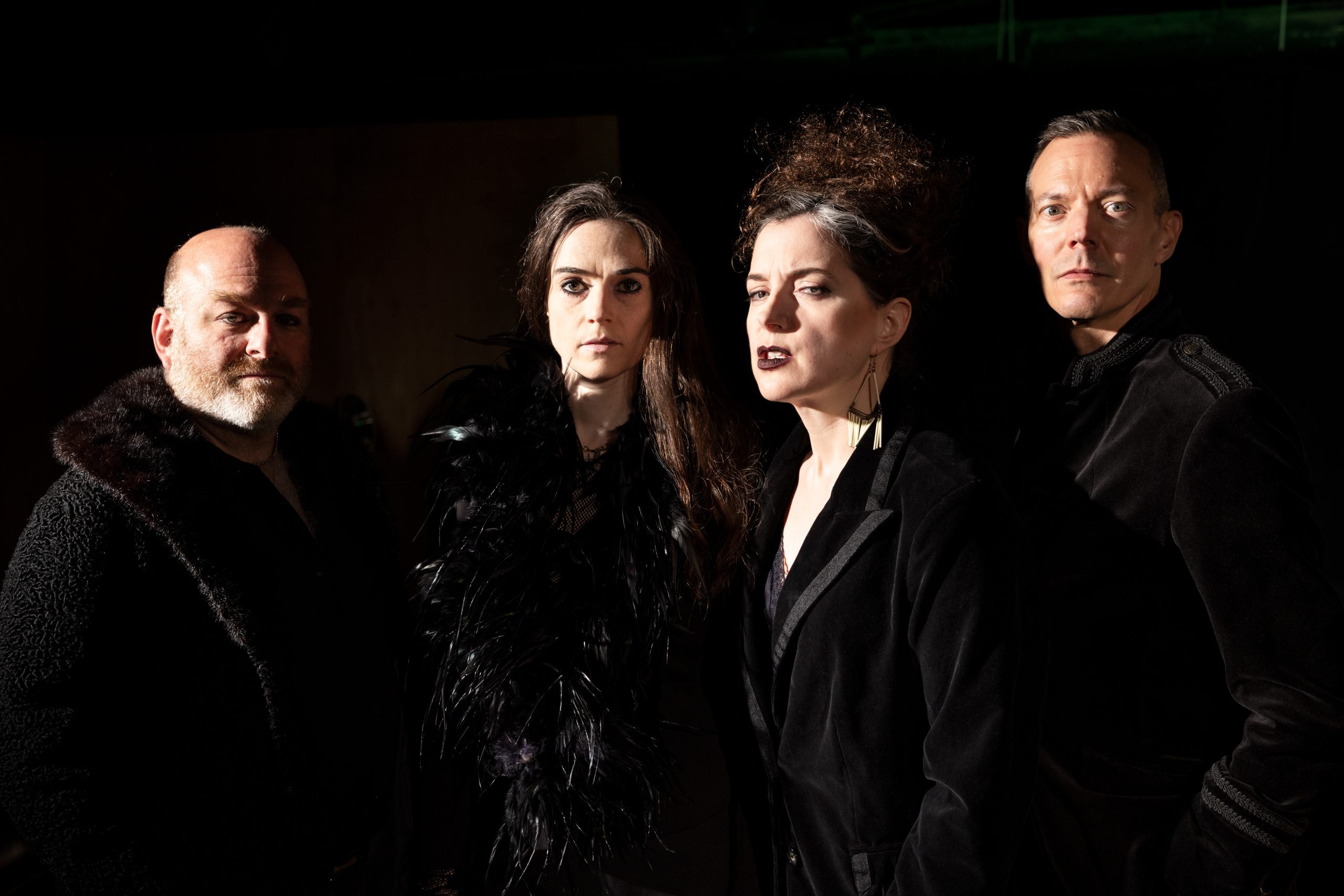
Suppose Beautiful Madeline Harvey is legendary experimental theater icon Richard Foreman’s first new play in 10 years, produced and performed by Brooklyn-based ensemble Object Collection.
Beautiful Madeline Harvey has a problem: she is not certain whether she does or does not, in fact, exist. Handsome Roger Vincent, whose life has been stolen from him, waits for her at a boulevard café, where their eyes meet like an electric shock. A paper-thin love story within a paper-thin world, speeding, so it would seem, towards inevitable catastrophe… or perhaps, a very serious twist. Will Madeline Harvey disappear by fire, by time, or simply disappear at last into her very own story? And will handsome Roger Vincent ever be able to tell the truth about all things?
Suppose Beautiful Madeline Harvey features a live ensemble performing a composed score of bubbling synths, stuttering drum machines, processed woodwinds, and heavy guitars. The text of the play is scored throughout in a kind of notated speech that ducks and weaves through the dense sound world.
Note from Richard Foreman on the play:
Bright sunlight and a shaking body! Madeline Harvey using this and only this to exist in the complicated world in which she finds herself. Her name itself evoking a giant clock on high in a busy terminal where people and ideas spin past with intensity as the only goal? That cannot be true, the real goal is to crack open the kernel of a life lived over and over. Madeline Harvey does not live this, but she SEES this with an intensity that will eventually destroy whomever it visits.
Travis Just on the music:
The text Richard gave us was originally written in a kind of poetic format, with line breaks in the middle of sentences, certain phrases isolated, and so on. I wanted to make this quasi-poetic form the basis for the composition so I went through line by line and made a kind of rhythmic analysis of the text. Occasionally I made this by simply counting syllables or language-beats, but often I would stretch or compress words and phrases to bring out particular rhythmic patterns that I thought were already embedded in the text. Act One, for example, features a lot of groupings of five (Ma-de-line Har-vey), while Act Two has a lot of fours (Ro-ger Vin-cent). The patterns and repetitions which emerged were then used throughout in the vocal notation (in a wide variety of ways). They were also used for all rhythms played by the instruments, synthesizers, and drum machines. The idea was for the music to make a kind of chaotic, not-quite-synchronized, heterophonic fabric to support Richard’s glorious, ecstatic words.